
Xbox Boss Says Next-Gen Console Will Prioritise ‘Efficiency and Affordability Alongside Performance’
Asha Sharma tells the BBC that rising component costs driven by AI demand are reshaping how Microsoft will build Project Helix, while a new disc-to-digital entitlement feature gives 1,000 physical Xbox games a digital future on consoles that may or may not include a disc drive.
Microsoft is redesigning its next-generation Xbox around affordability, not just raw performance, with Xbox chief executive Asha Sharma warning that a “crisis” in component prices driven by AI demand is forcing every console maker to rethink how next-gen hardware gets built and sold.
Speaking to the BBC in an interview published on August 27, Sharma said the company is preparing for the launch of its next-generation console — currently known by its codename, Project Helix — by focusing on “efficiency and affordability alongside performance” rather than chasing the same raw horsepower playbook the industry has used in previous console generations.
“All of the industry needs to start to innovate on affordability and efficiency. That is something that we have not had to do [previously],” Sharma told the BBC. “But with the crisis that’s currently happening in hardware and components, it is absolutely something all of us need to be thinking about and innovating on and giving people more choice in terms of how they play their console and how they purchase their console.”
She framed the moment as a “Rampocalypse,” a reference to the surge in RAM prices that has hit consoles across the board in 2026 and contributed to price hikes years after launch on every major platform. For Project Helix specifically, Sharma said Microsoft is rethinking “hardware efficiency in terms of how you use storage and memory, the kind of price per unit, the components, things like that,” rather than simply adding more power at higher cost.
The comments come as Microsoft and its competitors face a structural shift in how much it costs to build a console. Memory and storage components have become more expensive as AI companies buy up the same parts for their data centres, and Sony, Microsoft and Nintendo have all raised hardware prices over the past year as a result. Sharma’s interview is the first time an Xbox executive has publicly linked Project Helix’s design priorities to that component squeeze.
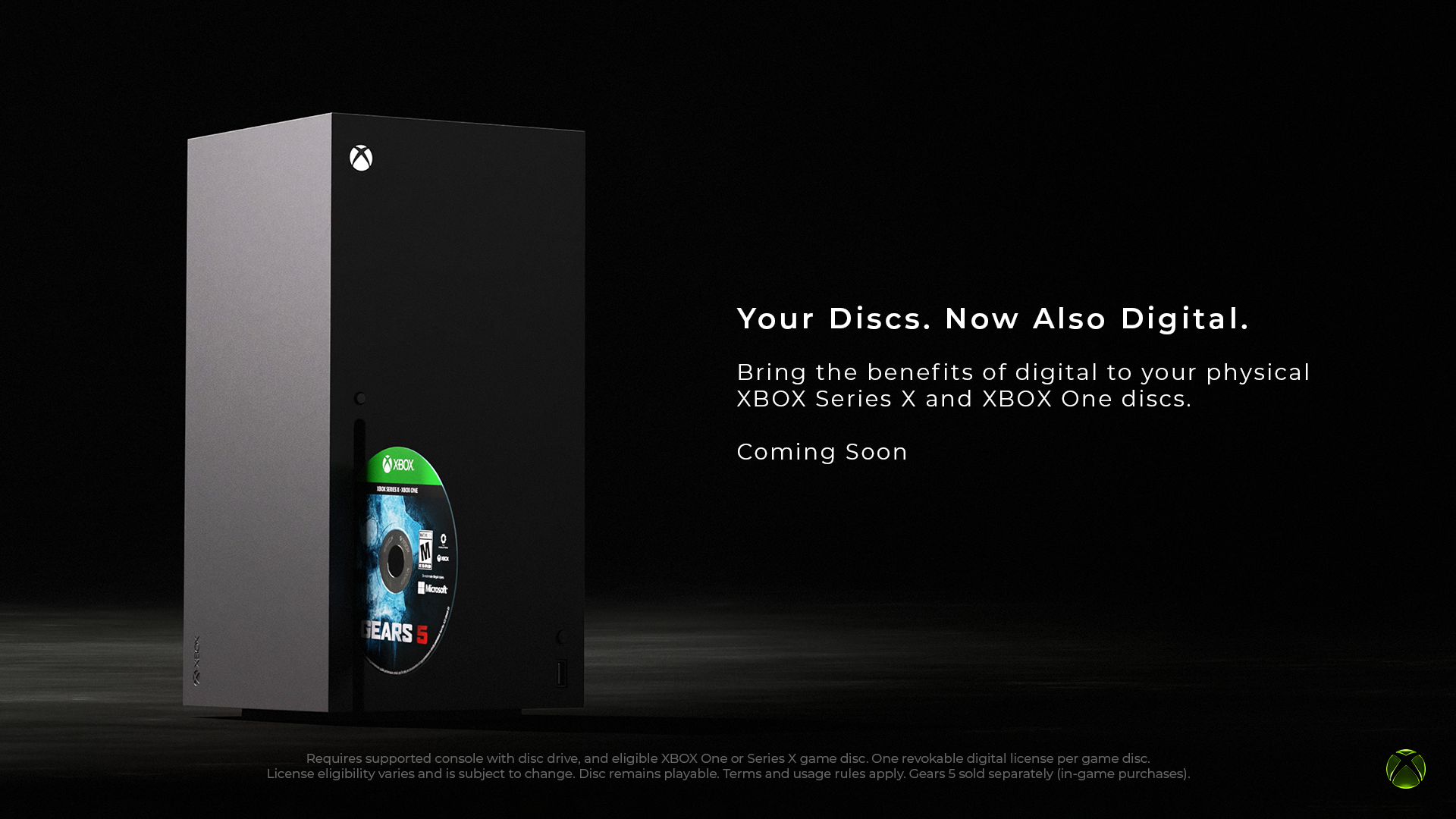
Microsoft used the same window to start rolling out a major new Xbox preservation feature that could reshape how physical games survive the move to whatever Project Helix ends up being. In a post on Xbox Wire, the company announced that Xbox Insiders will be able to test a new “discs-to-digital” entitlement from August 31. Supported Xbox One and Xbox Series X|S disc-based games can be inserted into a console, claimed once, and converted into a permanent digital entitlement that unlocks Xbox Play Anywhere and cloud streaming where supported — and the rights travel with the disc if it is later sold second-hand.
The feature is framed by Microsoft as part of a broader game-preservation push, with the company writing on Xbox Wire that it wants to make it easier for libraries “to move forward with players,” and noting that thousands of supported titles will be eligible at launch, with more added over time.
Sharma declined to confirm whether Project Helix itself will ship with a disc drive. “I know players love physical media, and I know there’s a lot of benefits in digital media, and I want to make sure people have a choice,” she said. “We’ve long pioneered backwards compatibility, and so you’ll continue to see that as we go forward in the generations.”
She also used the BBC interview to reiterate Microsoft’s stance on AI in Xbox games, repeating that the company has “no tolerance for bad AI” and will not chase short-term efficiency at the cost of “soulless AI slop.” Xbox chief content officer Matt Booty added that Microsoft is putting “no pressure” on internal teams to use AI, though tools that help with code or bug-checking “in the production pipeline” are fair game.
The interview lands as Microsoft is in the middle of a wider Xbox restructuring that has already cut roughly 3,200 jobs and seen the company divest five internal studios. Sharma described those moves as necessary “to ensure we are here for the next 25 years,” arguing that “we’re in the middle of a new generation that wants to play in a different way” and that “within Xbox, we haven’t been healthy.”
For players, the immediate practical change is the disc-to-digital programme, which begins testing on August 31 with Xbox Insiders and is the clearest signal yet that Microsoft is preparing for a future in which Project Helix may not need a disc drive at all to keep players connected to the games they already own.
Keep the signal
Community
Discussion · 0
Be the first to add a thoughtful response.